26 May 2026 · 6 min read
On-site crushing or carting to the tip: a decision guide
A decision guide for civil and demolition jobs across SEQ and NSW: when crushing concrete on site beats carting it away, and when carting still wins.
Written by Colin Luckman, Founder and operator. Twenty years in the recycling industry, running mobile crushing on civil and demolition sites across South-East Queensland and New South Wales.
If your project has concrete to clear, you have two options: cart it off to a tip and buy base material back in, or crush it where it sits and reuse it. For most civil and demolition work, crushing on site wins on cost, time and waste. But not always, and being straight about when it does not is part of giving good advice. Here is how to tell which job you have.
The hidden cost of carting away
Carting concrete off site is rarely a single cost. You pay for the trucks, the tipping fees, and then again to import road base or fill to replace what you sent away. Every load is a truck movement, and every movement is time, traffic management and risk on a busy site. Those truck movements also have a habit of stretching the program, because the job waits on haulage that has to share the road with everything else.
What crushing on site changes
A compact mobile crusher like the RM 70GO! 2.0 turns demolition concrete, asphalt and rock into gradable, compactable base on the spot. That changes the maths in four ways:
- Less material leaving site, so fewer truck movements and lower tipping fees.
- Less material coming in, because the recycled base can be reused as fill and sub-base.
- Reinforcing steel liberated and separated from the crushed concrete by the onboard magnet.
- A cleaner site and a smaller waste footprint on the job.
The time and safety angle
Cost is the headline, but the program and safety benefits are real too. Fewer truck movements means fewer vehicle interactions on and around the site, less traffic management and less exposure on the road. The crusher works to your program rather than to a haulage schedule, and the product builds up where you need it instead of arriving load by load. On a constrained or staged site, removing dozens of truck trips is sometimes worth as much as the dollar saving.
When it makes sense
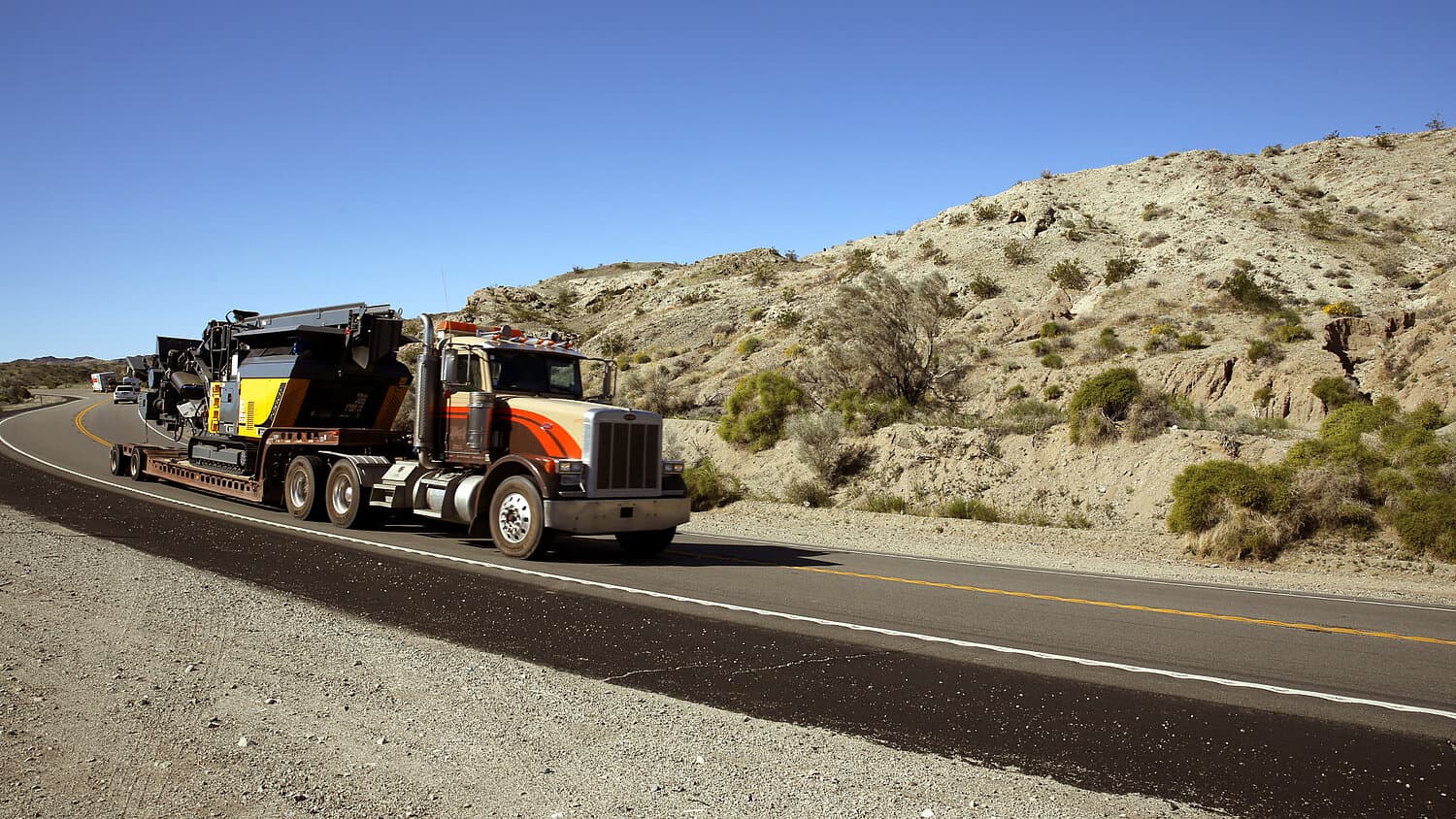
On-site crushing suits jobs with a worthwhile volume of clean, hard material: demolition concrete, excavation rock, road planings and asphalt millings. The crusher moves on a standard float and is working within about 20 minutes, so it fits in with the program rather than holding it up. As a rough guide, the more of these you can tick, the stronger the case:
- A real volume of material, not a few isolated lumps.
- Clean, hard feed: concrete, brick, rock or reclaimed asphalt, not mixed waste.
- A use for the recycled product on the same site or a nearby job.
- Space to feed the machine and stack the finished base.
When carting can still win
We would rather tell you straight. Carting can still be the better call when the volume is genuinely small, when the material is contaminated or mixed and cannot be cleanly crushed, or when there is simply no room on site to run a crusher and stockpile the product. In those cases the mobilisation does not pay for itself, and a skip or a tip run is the right answer. If your job is one of those, we will say so rather than sell you a crush you do not need.
Run your own numbers
The quickest way to see where your job lands is to put your own tonnage, tip fee and truck-hire figures into our cost calculator. It compares carting away against crushing on site and shows the indicative saving and the truck movements avoided, so you can make the call with real numbers rather than a gut feel.
If you want the dollar figures behind this decision worked through tonne by tonne, see the carting vs crushing cost comparison.
Put your own tonnage and cartage distance into the numbers with the crushing versus carting calculator.
If you have concrete, asphalt or rock to deal with on a project across South-East Queensland or New South Wales, talk to us about crushing it on site. Call 0401 803 662 or request a quote.
Common questions
- When is on-site crushing cheaper than carting concrete to the tip?
- On most jobs with a worthwhile volume of clean, hard material. Carting is three costs in one (haulage, tip fees and buying base back in), while crushing on site is a single per-tonne rate and you keep the product. Once all three carting costs are counted, on-site crushing usually wins clearly.
- When does carting to the tip still make more sense?
- When the volume is genuinely small, when the material is contaminated or mixed and cannot be cleanly crushed, or when there is no room on site to run a crusher and stockpile the product. In those cases a skip or tip run is the better call, and we will tell you so.
- How much site space does the crusher need?
- Enough room to feed the machine and stack the finished product. The RM 70GO! 2.0 is compact, about 24 tonnes and under 8 feet wide, and works in with site traffic management, but it does need clear space to operate and to build the stockpile.
- Does crushing on site slow the job down?
- Usually the opposite. The crusher arrives on a standard float and is working within about 20 minutes, it runs to your program rather than a haulage schedule, and it cuts the truck movements that often stretch a job out.
- What can be crushed on site?
- Clean concrete, brick, rock and reclaimed asphalt, with reinforcing steel separated out by the onboard magnet. Mixed or general waste is not suitable for crushing.
Related reading
13 July 2026 · 6 min read
Mobile crusher hire in SEQ: wet hire vs dry hire costs
Mobile crusher hire in SEQ: dry hire day rates leave production risk with you; wet hire billed per tonne on the onboard scale means you pay for product.
24 June 2026 · 7 min read
Recycled road base grades and specs from crushed concrete
The road base grades the RM 70GO! 2.0 produces from crushed concrete across SEQ and NSW, where crews use each grade, and how it compares to quarried base.
10 June 2026 · 7 min read
Concrete recycling in South-East Queensland: what it costs
On-site concrete crushing across Brisbane, Ipswich, Logan, the Gold Coast and Toowoomba, as low as $8 per tonne on higher-tonnage jobs, weighed on the machine.