
13 July 2026 · 6 min read
Mobile crusher hire in SEQ: wet hire vs dry hire costs
Mobile crusher hire in SEQ: dry hire day rates leave production risk with you; wet hire billed per tonne on the onboard scale means you pay for product.
Written by Colin Luckman, Founder and operator. Twenty years in the recycling industry, running mobile crushing on civil and demolition sites across South-East Queensland and New South Wales.
If you have searched for mobile crusher hire in Brisbane or anywhere across South-East Queensland, you have probably noticed the quotes are hard to compare. One company offers a machine on a day rate. Another quotes weekly dry hire plus a float fee. A third talks per tonne. They are not the same product, and picking the wrong model is how a straightforward crushing job turns into an expensive lesson. Here is the difference between wet hire and dry hire, what each one really costs, and why we run our RM 70GO! 2.0 as a wet hire service billed per tonne.
Dry hire: you get a machine, and all of the risk
Dry hire means the crusher arrives on a float and the rest is your problem. You supply the operator, and with them the responsibility for production rate, screen setup, blockages, daily servicing and getting the machine home in one piece. The day or weekly rate looks clean on paper, but it is only one line of the real cost:
- An experienced crusher operator, hired or pulled off other work, for every hour the machine runs.
- Production risk: if the feed is wrong or the setup is off, you pay the same daily rate for half the tonnes.
- Downtime risk: a blocked or poorly fed crusher still costs you rent while it sits.
- Wear, damage liability and bond terms that sit with you for the whole hire.
Dry hire can make sense for crews that crush week in, week out and carry their own experienced operator. For a civil or demolition contractor who crushes a few times a year, it usually means paying to learn someone else's machine on your own program.
Wet hire: machine, operator and the production risk, handled
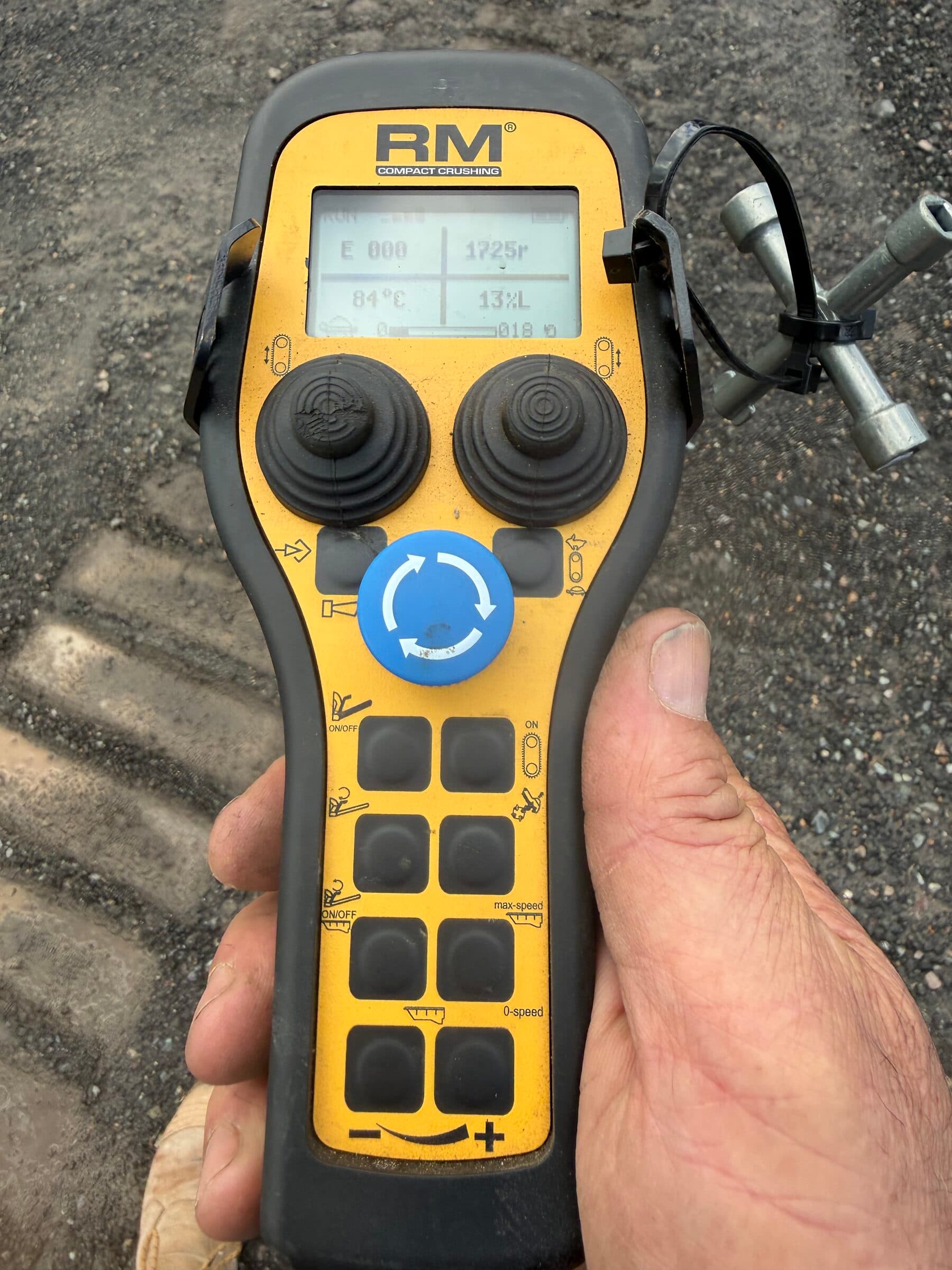
Wet hire means the crusher comes with the person who runs it. Our operator floats the RM 70GO! 2.0 to site, sets it up, runs the crush, clears any blockages, manages the screen setup for the product you need, and floats it out when the stockpile is done. Your excavator feeds the machine; everything else is ours. That changes what you are actually buying: not a machine by the day, but finished product on the ground.
It is also why wet hire suits per-tonne billing. The RM 70GO! 2.0 weighs everything it produces on its onboard belt scale, so the invoice is for exactly the tonnes that came off the conveyor. Most jobs land around $10 per tonne, higher-tonnage jobs can come in as low as $8 per tonne, and the price is firmed at quote. If the crush runs slow for any reason, that is our problem, not your day rate.
Comparing the two on a real job
Take a typical SEQ demolition stockpile of about 1,000 tonnes of clean concrete. On wet hire at $8 to $10 per tonne, that is $8,000 to $10,000 all-in for crushing, with the operator, setup and production risk included, and you know the number before the machine arrives. On dry hire, the same job is a weekly machine rate plus your operator's wages plus float fees, and the total depends entirely on how many tonnes per day your crew can actually push through an unfamiliar crusher. Run well, the numbers can end up close. Run badly, dry hire costs more and takes longer, and there is no way to know which you are getting until you are committed.
What you get on the day with us
The RM 70GO! 2.0 is a compact mobile impact crusher, about 24 tonnes, producing up to 140 tonnes per hour. It travels on a standard float with no oversize permits or escorts and is crushing within about 20 minutes of arriving. One operator runs it from the cabin with a radio remote as backup. The onboard magnet lifts reinforcing steel out of the crushed concrete, and the closed-loop screen grades the product in a single pass, so compactable road base, drainage gravel or 5 mm and 10 mm aggregate builds up ready to use. For oversized slabs and heavily reinforced material, our two-stage setup puts the Komplet Krokodile shredder in front of the crusher so tough feed is broken down first instead of turned away.
Questions to ask any crusher hire company
Whoever you hire, these five questions will surface the real cost of a quote fast:
- Is the operator included, and who carries the production risk if the crush runs slow?
- Am I paying by the day or by the tonne, and how are the tonnes measured?
- What float, mobilisation and permit costs sit on top of the rate?
- What happens with oversized or reinforced material: is it crushed, or left in the pile?
- Who handles servicing, blockages and screen changes during the hire?
Our answers are simple: operator included, billed per tonne on the onboard scale, transport quoted fairly by location, oversize handled by the two-stage Krokodile setup, and everything on the machine is ours to look after. Recycling King is QLD ERA licensed and fully insured, and crews across SEQ including C Civil and Fulton Hogan put their material through our machine.
Areas we cover
We provide mobile crusher hire with an operator across South-East Queensland, including Brisbane, Ipswich, Logan, the Gold Coast, the Sunshine Coast and Toowoomba, and throughout New South Wales including Sydney, Western Sydney, the Central Coast and Newcastle.
Full published specifications for the machine you are hiring are set out on the RM 70GO! 2.0 equipment page.
If you would rather we ran the job outright than hire the machine, that is our on-site crushing service.
To get a firm per-tonne price for crusher hire on your project, call 0401 803 662 or request a quote.
Common questions
- What is the difference between wet hire and dry hire for a mobile crusher?
- Dry hire is the machine only: you supply the operator and carry the production, downtime and damage risk for a day or weekly rate. Wet hire includes an experienced operator who sets up, runs and looks after the crusher, and the job is typically billed per tonne of product rather than per day, so the production risk stays with the hire company.
- How much does mobile crusher hire cost in South-East Queensland?
- Our wet hire service is priced per tonne, weighed on the RM 70GO! 2.0 onboard belt scale. Most jobs land around $10 per tonne and higher-tonnage jobs can come in as low as $8 per tonne, with transport quoted fairly by location and the firm price confirmed at quote. There is no separate operator charge or day rate.
- Is an operator included with the crusher hire?
- Yes. Every hire includes our operator, who floats the machine in, sets it up for the product you need, runs the crush, handles blockages and servicing, and floats it out again. Your excavator feeds the machine and your crew uses the product.
- Do I need any permits to get the crusher to site?
- No. At about 24 tonnes the RM 70GO! 2.0 travels on a standard float with no oversize classification, escorts or pilot vehicles, and it is typically crushing within about 20 minutes of arriving on site.
- Can the crusher handle reinforced or oversized concrete?
- Yes. Reinforcing steel is liberated during crushing and separated out by the onboard magnet. For oversized slabs and heavily reinforced material, our two-stage setup runs the Komplet Krokodile shredder ahead of the RM 70GO! 2.0 so tough feed is broken down first rather than left in the pile.
Related reading
20 August 2026 · 6 min read
Concrete recycling Sunshine Coast: costs and on-site crushing
Concrete recycling on the Sunshine Coast, priced from as low as $8 per tonne on higher-tonnage jobs. What disposal costs once the levy and the Bruce Highway run are counted.
24 June 2026 · 7 min read
Recycled road base grades and specs from crushed concrete
The road base grades the RM 70GO! 2.0 produces from crushed concrete across SEQ and NSW, where crews use each grade, and how it compares to quarried base.
10 June 2026 · 7 min read
Concrete recycling in South-East Queensland: what it costs
On-site concrete crushing across Brisbane, Ipswich, Logan, the Gold Coast and Toowoomba, as low as $8 per tonne on higher-tonnage jobs, weighed on the machine.