
24 June 2026 · 5 min read
RM 70GO! 2.0 mobile crusher: specs and on-site capability
The RUBBLE MASTER RM 70GO! 2.0 processes up to 140 tonnes per hour, weighs 24 tonnes and moves on a standard trailer. The go-to crusher for SEQ crews.
Written by Colin Luckman, Founder and operator. Twenty years in the recycling industry, running mobile crushing on civil and demolition sites across South-East Queensland and New South Wales.
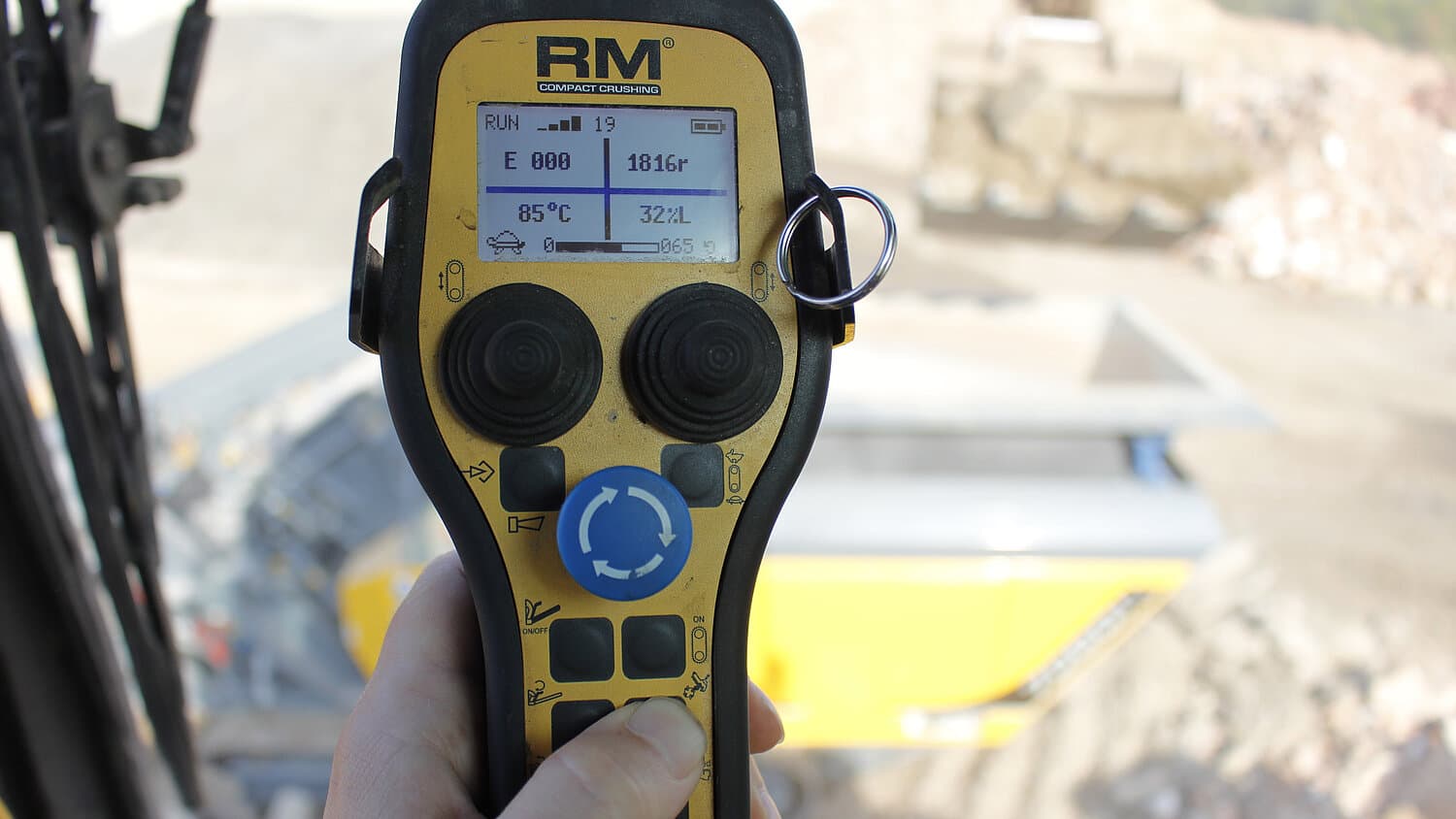
Most contractors do not care what brand a crusher is. They care about three things: how much it produces per hour, whether it fits on site, and whether it breaks down. The RM 70GO! 2.0 is a compact mobile impact crusher built by RUBBLE MASTER in Austria. It has become the workhorse of on-site concrete recycling in South East Queensland for one reason: it delivers on all three.
The Numbers That Matter
Throughput: up to 140 tonnes per hour depending on material and feed size. Weight: 24 tonnes on a standard float, with no oversize permits, no escorts and no pilot vehicles. Setup time: about 20 minutes from trailer to crushing. Output size: 5 mm or 10 mm graded aggregate from the closed-circuit screen. Feed opening: 760 mm by 600 mm, handling concrete slabs, asphalt, and natural rock up to around 500 mm edge length. These are not brochure numbers. They are what the machine does on SEQ civil sites every week.
Why It Works on Real SEQ Sites
The RM 70GO! 2.0 was designed for tight European urban sites, with constrained access and neighbours close by. That means it handles SEQ conditions well. It runs on a single diesel engine with low fuel burn per tonne crushed. It is operated by one person from the cabin or via radio remote, so the operator can watch the feed hopper while controlling the crusher. The magnet separator runs continuously, pulling liberated reinforcing steel out of the crushed material stream. The closed-loop screening system recirculates oversize material back to the crusher, so everything leaves at the spec size in a single pass.
Onboard Weighing: Pay for What You Get
One of the features that matters most to contractors is the onboard belt scale. The RM 70GO! 2.0 weighs every tonne as it comes off the discharge conveyor. You pay for actual production, not an estimate, not a day rate. If the machine crushes 380 tonnes in a day, you are billed for 380 tonnes. If the material is harder than expected and throughput drops, the scale adjusts automatically. There is no argument about what was produced because the number is on the machine.
What It Crushes
The RM 70GO! 2.0 handles clean demolition concrete, reinforced concrete (rebar is liberated during crushing), asphalt and bitumen, brick and masonry, and natural rock up to around 500 mm. It does not handle mixed general waste, timber, plastics, or material with high clay content. For oversized, contaminated, or mixed demolition debris, the two-stage Krokodile plus RM 70GO! setup pre-processes the material first. The Krokodile shredder tears through the tough stuff; the RM 70GO! follows and produces the finished graded product.
Mobilisation: Standard Float, 20-Minute Setup
At 24 tonnes, the RM 70GO! 2.0 travels on a standard float trailer behind a standard prime mover. No oversize permits for SEQ roads. No pilot vehicles. No route approvals for most urban and suburban roads. It clears standard height clearances. On arrival, the operator unhitches, deploys the discharge conveyor and magnet, and is crushing within about 20 minutes. When the job is done, it folds back up and moves to the next site. For contractors running sequential jobs (a slab in Ipswich on Monday, footings in Logan on Wednesday) the mobilisation speed means the crusher slots into the program rather than becoming the program.
Why Not Just Hire Any Crusher?
There are bigger crushers. There are cheaper crushers. The difference with the RM 70GO! 2.0 is the combination of throughput, transportability, and reliability in a single package. A larger tracked crusher might produce 200 tonnes per hour, but it needs a low-loader and permits just to get to site. A smaller crusher might be cheaper per hour, but it takes twice as long and the labour cost eats the saving. The RM 70GO! hits the sweet spot: enough throughput for serious civil volumes, compact enough to get anywhere, reliable enough to trust with a programme.
Getting the RM 70GO! on Your Next SEQ Job
The RM 70GO! 2.0 runs across South East Queensland and NSW regularly. Every quote is specific to your site, material, and tonnage because every job is different. Tell us the location, what you have, and roughly how much. We come back with a firm price, billed on the scale.
Every published figure quoted here, plus photos of the machine working, sits on the RM 70GO! 2.0 equipment page.
To see how those specifications translate into a day of production on your site, read about on-site concrete crushing.
Call 0401 803 662 or request a quote online. The crusher is ready. The float is fuelled. The operator is waiting.
Common questions
- How much can the RM 70GO! 2.0 crush per hour?
- Up to 140 tonnes per hour, depending on the material and the feed size. The closed-loop screening system recirculates oversize back to the crusher, so the product leaves at the spec size in a single pass rather than needing a second run. Recycling King runs the machine on civil and demolition sites across South East Queensland and New South Wales.
- What material can the RM 70GO! 2.0 handle?
- Clean demolition concrete, reinforced concrete, asphalt and bitumen, brick and masonry, and natural rock up to around 500 mm edge length, through a feed opening of 760 mm by 600 mm. The magnet separator runs continuously to pull liberated reinforcing steel out of the crushed stream. It does not take mixed general waste, timber, plastics or material with high clay content, so a clean stockpile in is what produces a good product out.
- Does the RM 70GO! 2.0 need oversize permits to get to site?
- No. At about 24 tonnes it travels on a standard float behind a standard prime mover, with no oversize permits, no escorts and no pilot vehicles for South East Queensland roads, and it clears standard height clearances. On arrival the operator deploys the discharge conveyor and magnet and is crushing within roughly 20 minutes, which is what lets Recycling King run sequential jobs in different cities in the same week.
- How is on-site crushing billed?
- By the tonne, weighed on the machine's onboard belt scale as material comes off the discharge conveyor. You pay for actual production rather than an estimate or a day rate, and there is no separate operator charge, so if the machine produces 380 tonnes in a day you are billed for 380 tonnes. Most jobs land around $10 per tonne, with higher-tonnage jobs as low as $8 per tonne, confirmed at quote.
Related reading
13 July 2026 · 6 min read
Mobile crusher hire in SEQ: wet hire vs dry hire costs
Mobile crusher hire in SEQ: dry hire day rates leave production risk with you; wet hire billed per tonne on the onboard scale means you pay for product.
2 September 2026 · 6 min read
Where to dump concrete in Brisbane, and when you should not
Dumping concrete is the right answer for a small load and the expensive answer for a big one. How to tell which job you have before you book trucks.
2 September 2026 · 7 min read
Choosing a concrete recycler in Brisbane: what to ask before you book
Concrete recyclers in Brisbane work in two completely different ways, and the cheaper one depends on your site. The questions that decide it.