
20 August 2026 · 7 min read
Recycled crushed concrete vs quarried road base: cost and use
A straight comparison of recycled crushed concrete and quarried road base on specification, consistency and cost, including where quarried material is still the right call.
Written by Colin Luckman, Founder and operator. Twenty years in the recycling industry, running mobile crushing on civil and demolition sites across South-East Queensland and New South Wales.
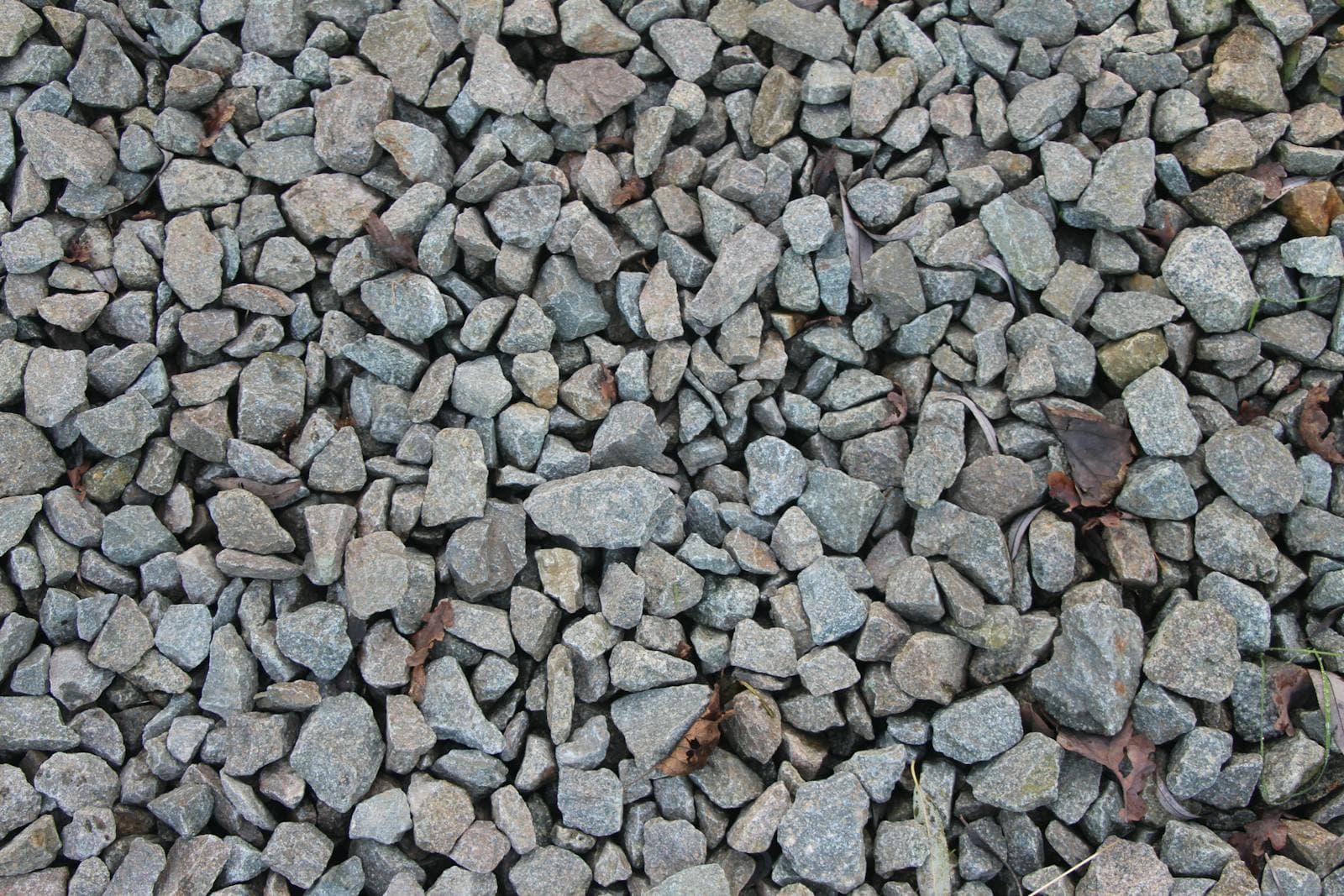
The comparison usually gets framed as recycled versus virgin, which is not really the decision anyone is making. The decision is between material you already have on the job and material you buy and truck in. That framing changes which differences matter. Here is how the two stack up on specification, consistency, cost and risk, and the cases where quarried material is still clearly the right answer.
On specification, Queensland already treats them together
The Department of Transport and Main Roads used to specify recycled pavement material separately from natural and quarried material, under MRTS35 Recycled Materials for Pavements. That separation is a large part of why recycled material saw limited use in Queensland unbound pavements: it had to be called up deliberately, and on most jobs it was not.
The NACOE research programme, run jointly by TMR and the Australian Road Research Board, addressed this through project P94, Optimising the Use of Unbound and Stabilised Recycled Pavement Materials in Queensland. Its laboratory work concluded that recycled materials show performance similar to natural and quarried materials, and on that basis TMR consolidated MRTS05 Unbound Pavements into a single specification covering natural, quarried and recycled material. Type 2, one of the types used for base and sub-base, is stated in the specification as able to be produced from natural, quarried or recycled material.
So the specification does not draw the line where people expect. It draws it at whether the material meets the nominated requirements, not at where it came from. The exception is worth naming: Types 1 and 3 tie the coarse component to a certified quarry source, and no amount of testing on recycled material changes that requirement.
The comparison, line by line
| Consideration | Recycled crushed concrete | Quarried road base |
|---|---|---|
| Where it comes from | Concrete already on your site, or bought in from a recycling operation | Won and processed at a quarry, then carted to site |
| How Queensland specifies it | Covered by MRTS05 since the specification was consolidated. Type 2 expressly admits recycled material | Covered by the same MRTS05 types. Types 1 and 3 require a certified quarry source for the coarse component |
| How strength is proven | CBR tested against the nominated subtype, the same gate as any other material | CBR tested against the nominated subtype |
| Consistency batch to batch | Tracks the feed stockpile. Clean, uniform concrete gives a consistent product, contaminated or mixed feed does not | Generally more uniform, coming from a single controlled geological source |
| Particle shape | Impact crushing produces an angular, cuboidal particle that keys together and compacts tightly | Angular where crushed, though shape varies with the source rock and the plant |
| What drives the cost | Crushing cost, plus the cartage and purchase you avoid. As low as $8 per tonne on higher-tonnage jobs | Purchase price, plus cartage in, plus the cost of removing the material it replaces |
| Lead time | Set by when a crusher can get to site and how fast your excavator can feed it | Set by quarry availability and truck cycles into your site |
| When it is the wrong call | Where a certified quarry source is nominated, where feed is contaminated, or where tonnage is too small to justify mobilising plant | Where you already have clean concrete on site and are paying twice to remove it and replace it |
Why the cost gap is wider than the per-tonne rates suggest
Comparing a per-tonne crushing rate against a per-tonne quarry rate understates the difference, because it counts one line item and ignores three. When you cart concrete off and buy base in, you pay to load it, you pay to move it, you pay the disposal charges at the other end including the Queensland waste levy, which for the 2026-27 financial year sits at $135 per tonne in the metropolitan Level 1 zone, and then you pay again to purchase and cart in the replacement product. Crushing on site collapses that into one movement of material that never leaves the job.
On-site crushing is priced per tonne and weighed on the machine's onboard belt scale, so you are billed on what actually came off the belt rather than an estimate. Most jobs land around $10 per tonne, and higher-tonnage jobs can come in as low as $8 per tonne. The saving that usually surprises people is not the crushing rate at all. It is the two sets of truck movements and the disposal charges that stop existing.
Where quarried material is still the right call
There is a real answer here and it is not always ours. Quarried material is the correct choice in several situations:
- The contract nominates a Type 1 or Type 3 material, where the specification requires the coarse component to come from a quarry holding current certification.
- The job needs a single, tightly controlled source with a long testing history behind it, which is easier to demonstrate from a quarry than from a one-off stockpile.
- The material on site is not clean. Concrete mixed with timber, plasterboard, soil or general rubbish has to be separated before it is worth crushing, and sometimes that is not economic.
- The tonnage is small. Below roughly 20 tonnes, mobilising a crusher cannot pay for itself, and buying base in is genuinely cheaper.
- There is no concrete on site to start with. Recycled material only competes on cost when the feed is already in front of you or is close by.
None of those are arguments against recycled material as a class. They are arguments about a particular job, which is the level the decision actually sits at.
The practical way to decide
Start with the contract. If a subtype is nominated, read which type it belongs to, because the type carries the source and certification requirements while the digit after the decimal point carries the minimum CBR. If a certified quarry source is required, the decision is made for you. If it is not, the question becomes an arithmetic one: how many tonnes of clean concrete are on site, how much base does the job need, and how far away is the nearest facility that would receive the one and sell you the other.
On a job with real tonnage and clean feed, the arithmetic usually favours crushing where the material already sits. On a small job, or one with contaminated feed, or one with a certified source called up, it does not. We will tell you which one yours is before you commit to either.
For the grades a crush produces and where each one gets used, see our recycled aggregate and road base range.
To put tonnes against your own job before comparing the two options, use the material calculator.
The recovery side of the operation, and what happens to material that does leave site, sits under material recycling.
Send through the tonnage, the material type and the site address for a firm per-tonne price, or call 0401 803 662. If buying quarried base is the cheaper answer for your job, we will say so.
Common questions
- Is recycled crushed concrete allowed where quarried road base is specified?
- It depends on the type nominated, not on the word recycled. TMR consolidated MRTS05 Unbound Pavements into a single specification covering natural, quarried and recycled materials, and Type 2 is stated as able to be produced from any of the three. Types 1 and 3 require the coarse component to come from a quarry holding current certification, so recycled material is not what those types are asking for. Read the type before assuming either way.
- Does recycled crushed concrete perform as well as quarried road base?
- The NACOE P94 project, run by TMR and the Australian Road Research Board, concluded from its laboratory work that recycled materials show performance similar to natural and quarried materials, and that finding is what led TMR to consolidate the specification. For a specific job, performance is proven the same way for both: CBR and grading tested against the nominated subtype. The larger practical difference is consistency, which tracks how clean and uniform the feed stockpile is.
- How much cheaper is recycled crushed concrete?
- On-site crushing is priced per tonne and weighed on the crusher's onboard belt scale, so you pay for what actually came off the belt. Most jobs land around $10 per tonne, and higher-tonnage jobs can come in as low as $8 per tonne, firmed at quote. The bigger saving is usually not the rate. It is that you stop paying to cart material away, stop paying disposal charges including the Queensland waste levy, and stop paying to buy and cart replacement base in.
- When should I buy quarried road base instead?
- When the contract nominates a Type 1 or Type 3 material requiring a certified quarry source, when the concrete on site is contaminated with timber, plasterboard, soil or general rubbish, when the tonnage is under roughly 20 tonnes so a crusher cannot pay for its mobilisation, or when there is no concrete on site to work with in the first place.
Related reading
20 August 2026 · 8 min read
Recycled crushed concrete specs in Queensland: MRTS05 and CBR
What TMR's MRTS05 Unbound Pavements specification says about recycled material, how the subtype numbers map to minimum CBR, and what to ask a supplier for.
24 June 2026 · 7 min read
Recycled road base grades and specs from crushed concrete
The road base grades the RM 70GO! 2.0 produces from crushed concrete across SEQ and NSW, where crews use each grade, and how it compares to quarried base.
2 September 2026 · 6 min read
Where to dump concrete in Brisbane, and when you should not
Dumping concrete is the right answer for a small load and the expensive answer for a big one. How to tell which job you have before you book trucks.