2 September 2026 · 7 min read
Choosing a concrete recycler in Brisbane: what to ask before you book
Concrete recyclers in Brisbane work in two completely different ways, and the cheaper one depends on your site. The questions that decide it.
Written by Colin Luckman, Founder and operator. Twenty years in the recycling industry, running mobile crushing on civil and demolition sites across South-East Queensland and New South Wales.
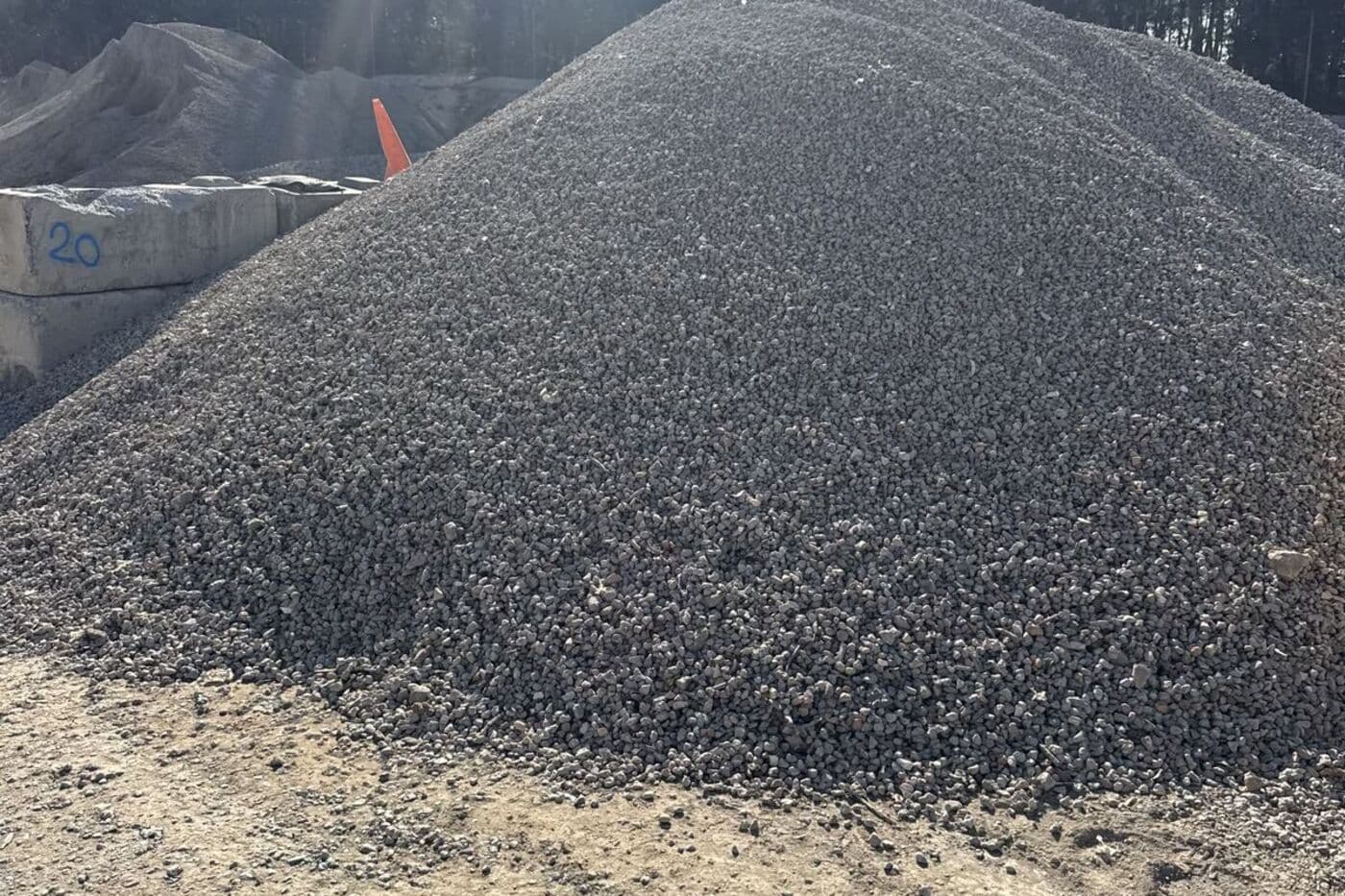
Search for concrete recyclers in Brisbane and you will get two kinds of business back, mixed together in the same list. One takes your concrete away. The other brings a crusher to your site and turns the concrete into road base where it already sits. They are priced differently, they suit different jobs, and the cheaper one depends almost entirely on how much material you have and where it is. Most people ring the first number they find without knowing there was a choice to make.
This is a plain guide to telling them apart and asking the right questions of each. We run the mobile side of it, so we have an interest here, and we have tried to be straight about where the fixed-site option genuinely wins.
The two models, and what each one actually charges for
A fixed-site recycler operates a yard with a weighbridge. You load your concrete into trucks, cart it across town, and pay a gate fee per tonne when you tip. Your total cost is the gate fee, plus the Queensland waste levy where it applies, plus the trucks and the driver hours to get it there and back. On a Brisbane job the cartage is often the largest of those three, and it is the one people leave out of the estimate because it arrives later as a fuel and hire bill rather than a docket.
A mobile operator brings the crusher to you. The material never leaves the site. You pay for the crushing by the tonne and you keep the output, which is usually the road base you were about to buy in. There is no cartage, no gate fee and no levy on material that never goes anywhere. The trade-off is that you need enough tonnage in one place to justify bringing plant in, and you need somewhere to stand the machine and stockpile the product.
Questions worth asking a fixed-site recycler
- What is the gate fee per tonne, and is the waste levy included in that figure or added on top?
- What will you reject at the gate? Reinforced slab, brick, asphalt and rock are all handled differently by different yards.
- What happens if a load is contaminated? Contamination charges are usually assessed per load and can dwarf the gate fee.
- What are your opening hours, and what is the truck turnaround time at your busiest?
- Do you weigh in and out, and will I get a docket per load I can reconcile against my own count?
The turnaround question matters more than it sounds. A yard that is twenty minutes away but has an hour-long queue at seven in the morning is further away than the map says, and every truck sitting in that queue is on hire.
Questions worth asking a mobile operator
- What is the minimum tonnage that makes a visit worth it, and will you tell me when my job is under it?
- How is the material weighed, and can I see the figure the invoice is based on?
- What float does the machine travel on, and does it need oversize permits, escorts or road closures?
- How long from arriving on site to producing product?
- What output grades can you produce, and can you switch grades in the same visit?
- What do you need from me before you arrive, in terms of separating the feed and having somewhere to stockpile?
For reference, our RM 70GO! 2.0 travels on a standard float with no oversize classification, permits or escorts, and is crushing within about twenty minutes of arriving on site. Output is graded in the machine to road base, drainage gravel and 5 mm or 10 mm aggregate, and every tonne is weighed on the onboard belt scale so the invoice is based on a figure you can watch accumulate rather than an estimate.
When a fixed-site recycler is genuinely the better answer
There are three situations where carting the material out is the right call, and any mobile operator who tells you otherwise is selling rather than advising.
- The volume is small. A single residential driveway or a few footings will not carry the cost of mobilising plant. Put it in a truck.
- The material is not clean. Concrete mixed through with timber, plasterboard or soil is not crusher feed. Separating it on a tight site can cost more than carting it.
- There is nowhere to work. A crusher needs a footprint to stand in, room for an excavator to feed it, and space to stockpile the product. Inner-city sites sometimes simply do not have it.
The honest version of the decision is that mobile crushing wins on tonnage and loses on small, messy or cramped jobs. If your job is one of the latter, a good fixed-site recycler is the cheaper answer and we will say so on the phone.
What clean actually means
Every recycler, fixed or mobile, is asking the same underlying question: is this clean hard material. Concrete, brick, rock and asphalt crush well and produce a saleable product. Reinforcing steel is expected and is removed as part of the process. What causes problems is the soft contamination, timber, plasterboard, plastic, insulation and soil, because it cannot be crushed into anything useful and it has to be picked out by hand or rejected.
If you are pricing a job, the single most useful thing you can do before ringing anyone is separate your hard material into its own stockpile. It changes the quote you get from both kinds of recycler, and it is the difference between being charged for a load and being charged for a contaminated load.
The levy is the part people forget
Brisbane sits in the metropolitan levy zone, where the Queensland general waste levy is $135 per tonne for the 2026-27 financial year. That sits on top of whatever the yard charges at the gate and on top of the cartage. It applies to material that leaves the site and goes to a levyable facility, which is why keeping clean hard material on site removes the question rather than reducing it.
We have written separately about what concrete disposal actually costs around Brisbane once the levy and the trucks are counted properly. Concrete disposal in Brisbane: options and costs.
A short way to decide
If you have a large stockpile of clean concrete, room to work, and you are going to buy road base for the same job, get a mobile operator to quote. If you have a small or dirty pile, or no space, ring a yard. If you are somewhere in the middle, get both numbers and compare them with the cartage included, because that is the line that usually decides it and it is the one most often left out.
Common questions
- What is the difference between a concrete recycler and a mobile crushing service?
- A concrete recycler usually operates a fixed yard with a weighbridge, and you cart your material to them and pay a gate fee per tonne. A mobile crushing service brings the crusher to your site and processes the concrete where it already sits, so there is no cartage and no gate fee. Both are described as concrete recycling, which is why search results mix them together.
- Is it cheaper to cart concrete to a recycler or crush it on site in Brisbane?
- It depends on tonnage and space. Carting is cheaper for small or contaminated volumes and for sites with nowhere to stand a machine. On-site crushing is usually cheaper once you have a decent stockpile of clean concrete and you were going to buy road base anyway, because you avoid the gate fee, the waste levy and the truck movements at the same time.
- What material can concrete recyclers accept?
- Clean hard material: concrete, brick, rock and asphalt. Reinforcing steel is expected and removed during processing. Soft contamination such as timber, plasterboard, plastic and soil causes problems for both fixed and mobile operators, and is the usual reason a load is rejected or charged at a higher rate.
- How much tonnage do I need before mobile crushing makes sense?
- There is a threshold below which mobilising plant costs more than carting the material away, and it varies with the site. The practical answer is to say what you have and let the operator tell you honestly whether it is worth a visit. Where several stages or adjacent lots can be stockpiled and crushed in one visit, jobs that individually would not qualify often do together.
- Does the Queensland waste levy apply to recycled concrete?
- The levy applies to material disposed of at a levyable facility. Brisbane is in the metropolitan zone at $135 per tonne for 2026-27. Material that is recycled on site and stays on site does not go to a facility, so the question does not arise. Where material is carted to a recycler, whether the levy is inside or on top of the quoted gate fee is worth asking directly.
Related reading
2 September 2026 · 6 min read
Where to dump concrete in Brisbane, and when you should not
Dumping concrete is the right answer for a small load and the expensive answer for a big one. How to tell which job you have before you book trucks.
13 July 2026 · 6 min read
Concrete disposal in Brisbane: options and real costs
Concrete disposal in Brisbane: tip, skip or on-site crushing as low as $8 per tonne on higher-tonnage jobs. What each costs in 2026 and how to choose.
24 June 2026 · 5 min read
Brisbane tip fees for concrete: the 2026 waste levy explained
Brisbane tip fees plus the 2026-27 Queensland waste levy of $135 per tonne, what concrete really costs to dump, and when crushing on site is cheaper.