
17 August 2026 · 6 min read
Concrete recycling in Logan: costs and when to crush on site
Concrete recycling in Logan, as low as $8 per tonne on higher-tonnage jobs. What disposal costs once the levy is counted, and when to crush on site.
Written by Colin Luckman, Founder and operator. Twenty years in the recycling industry, running mobile crushing on civil and demolition sites across South-East Queensland and New South Wales.
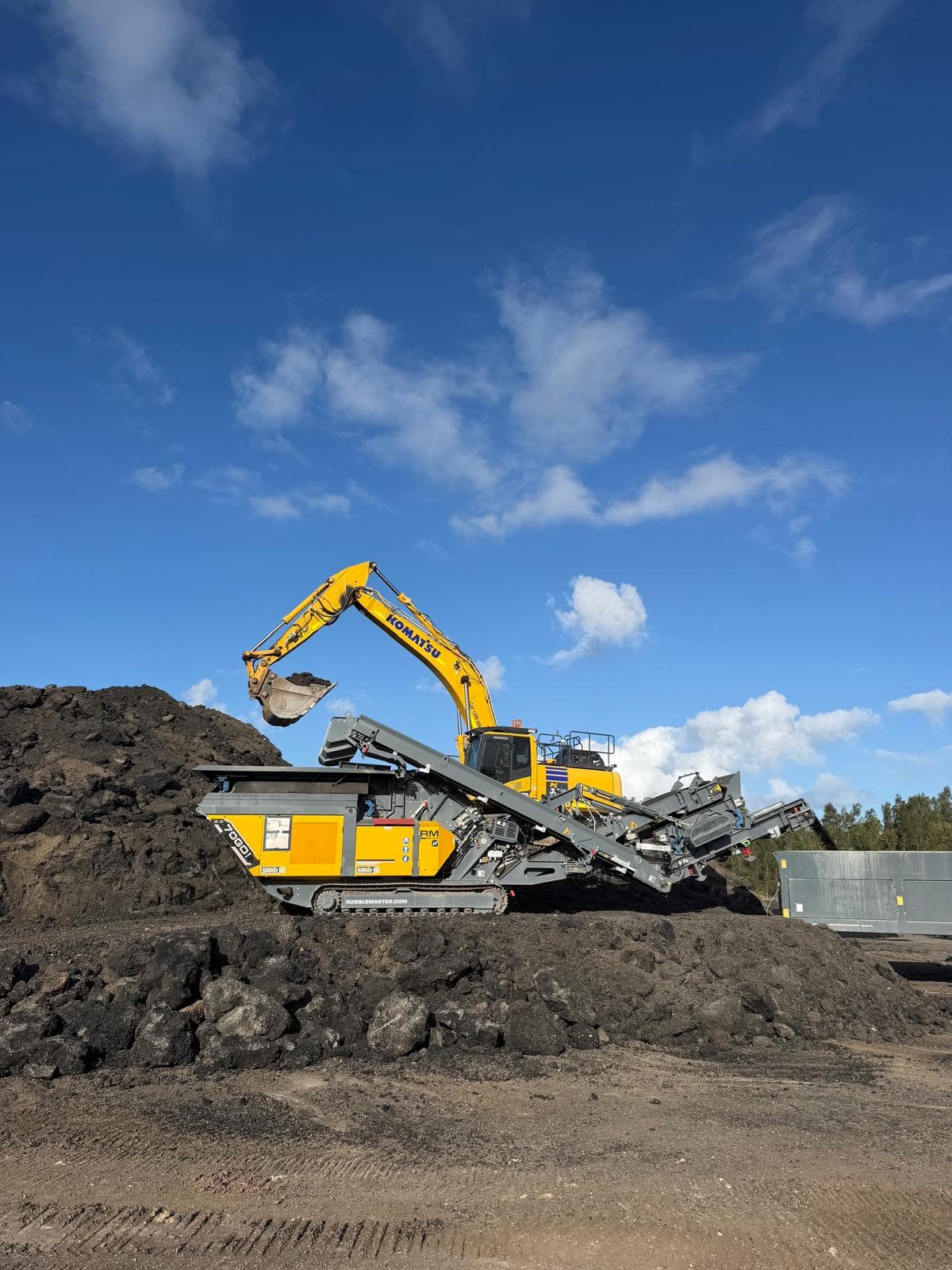
If you are looking for concrete recycling in Logan, you are probably standing next to a pile of broken slab, kerb, footings or old pavement and working out where it goes. The default answer is a truck and a gate fee. On any job with real tonnage, that is also the most expensive answer available to you. Here is what the disposal route actually costs in Logan once every line is counted, what crushing the material where it already sits costs instead, and how to tell quickly which side of the line your job falls on.
Logan is generating concrete from both directions at once
Most growth areas produce concrete one way. Logan produces it two ways. To the south and west, the declared priority development areas at Yarrabilba and Greater Flagstone, along with Park Ridge, Logan Reserve and Jimboomba, mean new road building, kerb and channel, hardstand and civil infrastructure going in at scale. Closer to the M1 and the Logan Motorway, the older suburbs around Beenleigh, Springwood, Woodridge and Browns Plains are being redeveloped, which means slabs, driveways, footings and old pavement coming out. Greenfield work and infill work both end with the same problem: a stockpile of clean hard material and a decision about what to do with it.
What the disposal route costs in Logan
Sending clean concrete away is rarely one charge. It is a stack of them, and the stack is what catches people out:
- The Queensland waste levy, currently $135 per tonne on construction and demolition material going to landfill. This applies to material that leaves your site for disposal.
- Gate fees at the receiving facility, which for clean concrete around Brisbane now exceed $80 per tonne.
- Cartage, which on a Logan job means truck time in M1 and Logan Motorway traffic, and is charged whether the truck is full or not.
- Loading plant and operator time spent filling trucks rather than progressing the job.
- Buying replacement road base and bringing it back in, which is a second set of truck movements and a second invoice.
What crushing on site costs instead
We bring the RM 70GO! 2.0 mobile impact crusher to your Logan site and turn the pile into usable product where it already is. Most jobs land around $10 per tonne, and higher-tonnage jobs can come in as low as $8 per tonne. The machine weighs everything it produces on its onboard belt scale, so you are billed on what actually came out, not on an estimate. There is no separate day rate and no operator charge on top.
A worked example: 300 tonnes in the Flagstone corridor
Take 300 tonnes of clean slab, kerb and footings off a civil job in the Greater Flagstone area. Sent to landfill, the waste levy alone is $40,500 at $135 per tonne, before a single gate fee or truck movement. Add facility charges and haulage and the real number climbs a long way past that. Crushed where it sits at about $10 per tonne, the same 300 tonnes costs in the order of $3,000, and you finish with roughly 300 tonnes of compactable road base sitting on your job rather than a hole in your budget. On a subdivision that needs base anyway, that material goes straight back under your own roads and pads.
Two things that work in Logan's favour
The first is distance and traffic. Logan jobs feed onto the M1 and the Logan Motorway, and a round trip to a commercial recycling facility burns far more truck time than the map suggests. The longer that round trip, the more of your disposal budget is spent on driving rather than on disposal. The second is that Logan's growth corridors need base as fast as they generate rubble. In an estate where roads, driveways and hardstand are going in continuously, the material you were about to pay to remove is the same material you were about to pay to import. Crushing on site collapses two line items into one.
When carting is still the right call
We will tell you when crushing does not stack up. Under roughly 20 tonnes, a skip or a removal contractor is usually the better answer, because a crusher cannot pay for its mobilisation on that volume. Concrete is heavy, around 2.4 tonnes per cubic metre, so skips reach their weight limit long before they look full, but for a broken path or a few footings that is still the cheaper path. The other case is material that is not clean. We crush concrete, brick, rock and asphalt. If the pile is mixed with timber, plasterboard, soil or general rubbish, it needs to be separated first or handled another way.
How a Logan job actually runs
- Send us the tonnage, the material type and the site address, and we give you a firm per-tonne price.
- The RM 70GO! 2.0 arrives on a standard float. At about 24 tonnes it needs no oversize permits, escorts or pilot vehicles.
- It is typically crushing within about 20 minutes of arriving on site.
- Your excavator feeds it, or we can discuss plant if you do not have a machine free.
- Product comes off the belt graded and weighed, ready to place or stockpile.
Logan sits inside our core coverage, alongside Brisbane, Ipswich and the Gold Coast. See the full South-East Queensland service area.
For how the process runs on a live site, from float delivery to stockpile, read about on-site concrete crushing.
If you have concrete stacking up on a Logan job and you want a straight answer on whether crushing beats carting, send through the tonnage and the address. If carting is genuinely cheaper for your volume, we will say so.
Common questions
- How much does concrete recycling cost in Logan?
- On-site crushing is priced per tonne and weighed on the RM 70GO! 2.0 onboard belt scale. Most Logan jobs land around $10 per tonne, and higher-tonnage jobs can come in as low as $8 per tonne, with transport quoted by location and the firm price confirmed at quote. There is no separate day rate or operator charge.
- Can I take concrete to a Logan City Council facility?
- Logan City Council operates waste and recycling facilities across the city and charges apply for concrete, because it carries handling and processing costs. Commercial and trade tonnage is quoted separately, so contact council directly for current rates. For a small load a council facility is a sensible option. Once you have a stockpile, gate fees, the waste levy and trucking usually make crushing on site the cheaper route.
- How much concrete makes on-site crushing worthwhile in Logan?
- As a rough guide, under about 20 tonnes a skip or a removal contractor is the better answer, because a crusher will not pay for its mobilisation. Above that, the more tonnes you have, the better the per-tonne rate, which is how jobs reach the $8 per tonne end. Send us your tonnage and we will tell you honestly which side of the line you are on.
- Do I need permits to bring a crusher onto a Logan site?
- No. At about 24 tonnes the RM 70GO! 2.0 travels on a standard float with no oversize classification, escorts or pilot vehicles, and it is typically crushing within about 20 minutes of arriving on site.
- What can I do with the crushed material on a Logan subdivision?
- Crushed concrete comes off the belt as compactable road base, drainage gravel and smaller aggregate depending on how it is screened. On a subdivision or civil job it goes straight back under roads, driveways, pads and hardstand, which means you are not paying to remove material and then paying again to import replacement base.
Related reading
20 August 2026 · 6 min read
Concrete recycling Sunshine Coast: costs and on-site crushing
Concrete recycling on the Sunshine Coast, priced from as low as $8 per tonne on higher-tonnage jobs. What disposal costs once the levy and the Bruce Highway run are counted.
20 August 2026 · 6 min read
Concrete recycling Toowoomba: costs and the regional levy
Toowoomba sits in the regional levy zone at $100 per tonne, not the $135 metropolitan rate. What that means for concrete disposal, and when crushing on site wins.
31 July 2026 · 6 min read
Concrete recycling in Ipswich: costs and when to crush on site
Concrete recycling in Ipswich, around $10 per tonne on most jobs. What the disposal route costs once the waste levy is counted, and when to crush on site.